06 June, 2010

Manitoba - Centre of the Canada

Land Under Water Outside Winnipeg
Next day we drove to Brandon where we met Scott & Ann Day who have stayed with us in the past. Scott is the Diversification Specialist with Manitoba Ag, Food and Rural Initiatives. He runs the research program out of Melita Manitoba. Scott has been to Australia where he spoke at a number of conferences including SANTFA’s Annual Conference.
Scott’s group run a multitude of sites across South Western Manitoba. All of the trials are sown under No-Till conditions. Each year they run variety evaluation trials of the normal range of crops such as Wheat, Canola and Legumes. Over the last year they also included trials into new crops such as Hemp. They now have a hemp processing plant in the area. Other crops they are trying include short season Maize, Hairy vetch and Canedula for oil.
Scott Spraying Some Plots
Scott runs his own farm as well in the district. No-till has allowed him to do both jobs as the time input is a lot lower than conventional methods. It has enabled to get his crop in a lot earlier than before, which has been a good way this year as we seem to have again bought the rain with us. Since we arrived in New Jersey a month ago, it rains just about every second day. Throughout the two days in Manitoba so far there has been up to 200mm or 8”.

Huge Precision Planter
Scot, Ann and Alex their daughter were great to visit and gave us a good look around South Western Manitoba. Scott's mate, Keith took us out to his hunting shack in the scrub (Woods). They had a monuted deer head. But not your normal one, this one had two deer killed with one bullet. The deer were fighting and got stuck together.

Great Trophy if This is Your Thing

USA to Canada

Today was the last in the USA. Off to Canada. We left Mandan to head for Grand Forks. We had hired one car for the USA and then a bus trip over the border and picked another one in Winnipeg. We are going in one direction so they wanted $6,800 for Kansas City to Vancouver, but by doing the bus bit we saved over $US 4000.It was good to send one back without a scratch this time. The bus was 1 hour late so we didn’t leave till 5. Drove along very hungry so we ate a bag of our Lindt gift chocolates! We got to the Canadian border and all had to be checked. We went in to the office and got asked all these questions. Just like on border watch. They called us back to the counter after checking us out. The guard said he thought it was funny to see someone who farms rabbits. These police checks are thorough! No he just googled us!

Canadian Border
One of the guys on the bus had been done once before for drug possession so of course he got the full search and 3rd degree. I'm not sure if it was a full cavity as well. Which took an extra hour. Oh well. We arrived at Winnipeg airport/bus station at 9.30. picked up our new hire car. This time a Toyota corolla matrix. It seems better than the last Chevy cobalt. Holds the road better. Not as many features though. Both bloody tired so we pulled up at the first dodgy motel we could find. Still $99 for the night. Walked down and got some Chinese takeaway home bed by 11.30.

Kris Nicholls

Kris is a researcher at the USDA facility at Mandan in North Dakota. Her main field of study is Arbuscular Mycorrhizal Fungi (AMF) and Glomalin which is found on the hyphae of these AMF”s. Kris has also been responsible for a crop rotation /sequence project which has looked at 100 different rotations and the results can be found on the USDA website. They are currently doing trials on cover crops looking at 19 different combinations of crops as well as looking at single cover crops and at the end of the year they will overlay this with 4 different cash crops. Her main area is working with the AMF and their hyphae which produces glomalin and its affect on soil structure, decomposition of organic matter, microorganisms and water holding capacity.


Glomalin

Properties:

• Formed by Arbuscular Mychrrhizal Fungi

o Beneficial to most crop plants

o Found in all soils

• Produced in large amounts

• Extremely “tough”

o Does not dissolve in water

o Resistant to decay.

Function

• Protects Hyphae from nutrient loss

• Glues together soil aggregates

• Stabilises aggregates

o Reduces soil erosion

o Increases water infiltration

o Increases water retention near roots

o Improves nutrient cycling

o Improves carbon storage

o Improves root penetration by reducing compaction

What can you do to increase glomalin?

• Minimum or no-till to reduce disruption of hyphal network

• Reduced inputs, minimum P fertiliser

• Cover crops to maintain living roots

• Nonmycorrhizal crops (canola, cabbage, broccoli, cauliflower) equal no glomalin production.

Over all the AMF’s help build resilience in the soils. Talking with Kris about residue, its benefits include covering the soil and armouring it against crusting and erosion, but she feels that 80% of the respiration of this stubble respires as CO2 in the first year and only 0.01% goes to the long term increase of organic matter. The main source of carbon comes from the photosynthetic carbon coming from root exudates. The residue eaters of the microorganisms are like piranhas and are very voracious eaters with the loss of the carbon into the atmosphere. The residue with high carbon low nitrogen breaks down slower than stubble with low carbon and high nitrogen which breaks down quicker. Normally in the growing plants the more vegetation there is above ground the more carbon is found below ground. This was a really interesting visit and we caught up with Kris that night for tea to continue our discussions.

North Dakota


Mike's Seeding Rig
Mike Zoot is a zero- till farmer in the Beach area of Western North Dakota. He grows a variety of crops in an area considered too dry in the past. This area was traditionally a wheat fallow area, but now Mike successfully grows corn, wheat (spring & winter), alfalfa, durum and cranbee (oilseed). His growing season is very short at 100 days which is half of our mid north SA growing season. He sows over 10000 acres each year with the range of crops. About a third of this land is rented and the rest owned. He has been zero tilling this land for nearly 20 years. He started with an average of 2.8% organic matter and has some now in the range of 5% organic matter. Mike is finding that his microbial activity is working exceptionally well and is finding it hard to maintain full stubble cover as the residue is breaking down too quickly and he is losing some of the soil moisture through evaporation.

Some of His Macro-Organisms at Work
He works hard to ensure that there is a crop or stubble cover on all paddocks at all times. He is currently doing some work with precision agriculture on a small percentage of his farm to see how he may be able to make the systems work. In the last few years he is seeing a reduction in the amount of fungicides applied as more farmers in his area have taken up zero till practices on their farms.

Mike's JD Assembly with Spacer to Increase Spring Tension

These Are on Tynes Behind the Wheels 
Mike has grid soil tested a number of his paddocks down to 2 ha blocks and he is changing his nitrogen fertiliser applications to get yield potential dependent on the rain and the soil zones.

Mike maintains a number of areas on his farm for wildlife habitats and even plants corn and alfalfa in some areas for them so that the birds and animals have some feed through the winter months.

Ring Neck Pheasant

Dakota Badlands and Mt Rushmore


After leaving Pierre pronounced Pier by the locals we headed west to the Badlands. Its just a pile of massive sand hills quickly eroding away in the weather. Good to look at though. It was a massive area.

At the Badlands
Conventional Tillage Gone Wrong
Dinosaur Fossil Area
 After leaving the Badlands we continued west. All the way along the side of the road were signs advertising a town called Wall and they have a drug store that has now become a tourist spot with 20,000 visitors a day in summer. They suck you in with free iced water and 5 cent coffee.


We went into Wall Drug and saw a big tourist destination but not a lot of substance. West Ho! roll those wagons and off to Mt Rushmore.


Mt Rushmore From Carpark

In the local town of Keystone we found a musuem which honours the scuptor, Gutzon Borglum who created the wonderful monument. The story behind Mt Rushmore is just as good as the Mount. he made a small model which was about 20 feet tall and was very detailed showing all of the presidents down to waist height. He ran out of money and died before the project was finished. He was going to make a stone vault as a time capsule aswell. That was not done either. After doing our tourist bit it was time to move on. Heading north we stopped at Spearifh for the night.

Dakota Lakes Research Farm

Dwayne Beck is seen as the No-Till master in the US. His experience and expertise and research in the area are unsurpassed by anyone we have met.


Dwayne is now a professor of Plant Science at South Dakota State Uni. He is the research manager of Dakota Lakes Research Farm. The research farm has a carter to create conditions appropriate for research scientists from the South Dakota State Uni and VSDA. To accommodate this Dwayne has set up three rotations:

- Winter Wheat – Corn – Broadleaf

- Spring Wheat- Winter Wheat – Corn – Broadleaf

- Winter Wheat- Broadleaf – Corn - Broadleaf
Seeding Through Corn Silage
The broadleaf crops grown prior to winter wheat have to be a cool season one eg peas , canola & linseed.
Peas Sown at Uniform Depth
Where the broadleaf crop sown prior to spring wheat or corn can be either cool or warm season species. Eg. Soybeans and sunflowers. These different rotations give a great deal of diversity in creating differing condition for testing treatments. All of the work is sown with his own seeder which is a conglomerate of home brand parts with some well known parts.

A JD Single Disc With New Depth Wheels, a Seed Packer and Furrow Closer Stars
Dwayne stated that most research is focused on very short term goals with little attention being given to long term changes. These rotations have 25% , 33% and 50% low residue. There is a definite difference between the rotations in terms of the amount of surface residue that can be maintained. The good performance of those rotations with more residue has been significant.

Dwayne regards tillage and burning as two very large sins. Tillage is used to cover a multitude of sins, such as poor weed control prior to seeding therefore the need to cultivate. This helps to break down soil stability and structure. It also breaks up micro and macro point. The burning of stubble should not be carried out as a large amount of nutrients are lost as seen below.

Excerpt from Dwayne Becks’ notes

An Emphasis on Rotations

Determining what to grow as rotational crops and how they will be sequenced can be a complex process. There are however some general guidelines that can be extremely helpful in beginning the process. Consider this to be Beck’s TOP 10 LIST . The order they appear does not denote importance.

1. Reduced and no-till systems favour the inclusion of alternative crops. Tilled systems may not.

2. A two season interval between growing a given crop or crop type is preferred. Some broadleaf crops require more time.

3. Chemical fallow is not as effective at breaking weed, disease, and insect cycles as are black fallow, green fallow or production of a properly chosen crop.

4. Rotations should be sequenced to make it easy to prevent volunteer plants of the previous crop from becoming a weed problem.

5. Producers with livestock enterprises find it less difficult to introduce diversity into rotations.

a. Use of forage or flexible forage/grain crops and green fallow enhance the ability to tailor rotational intensity.

6. Crops destined for direct human food use pose the highest risk and offer the highest potential returns.

7. The desire to increase diversity and intensity needs to be balanced with profitability.

8. Soil moisture storage is affected by surface residue amounts, inter-crop period, snow catch ability of stubble, rooting depth characteristics, soil characteristics, precipitation patterns, and other factors.

9. Seedbed conditions at the desired seeding time can be controlled through use of crops with differing characteristics in regard to residue colour, level, distribution and architecture.

10. Rotations that are not consistent in either crop sequence or crop interval guard against pest species shifts and minimize thee probability of developing resistant, tolerant or adapted pest species.

Dwayne is currently working with a South American machinery company to produce a new disc seeder. It will have a walking beam to flow over terrain better, offset double disc's, seed firmer and furrow closer stars.
Original Machine
New Assembly in Production

 During the afternoon we visited two farmers who were directors on the board of the Dakota Lakes Research Farm. Both Dan Forgey and Ralph Horowitz were full zero-tillers. They used either the JD Max Emerge Planters or JD disc airseeders. Dan and Ralph both agreed that you need disc’s to make Zero-till work with full stubble retention and you had to do both in order to make the system work. You cannot do one without the other.
Dan & Dwayne

03 June, 2010

South Dakota

An Excellent Crop of Winter Wheat
Brad Karlin was our first visit on Sunday. He and his brother farm 26000 acres of prairie and hill country. Half of this is cropped and the other half is used for fattening cattle. Brad utilises the full zero till cropping system with disc seeding and full stubble retention. It has only been in recent years that a lot of the old prairie sod land has been brought into crop. He uses a multitude of crops which include peas, lentils, wheat, corn and soybeans.

Peas Sown Into Corn Stubble

Brad and his brother also have a few weather/wind towers to trial for their suitability for erecting wind farm generators.

So far all of the farmers we have seen have a very good approach to natural resources, whether it was increase native vegetation or leaving areas of corn un harvested to help animals get through winter. There is a large number birds and a lot of deer.

Bart & Lynne Ruth - Nebraska


Bart & Lynne Ruth farm near Rising City in Nebraska. We met Bart & Lynne at the Nuffield Scholars Contemporary Conference in Washington in March. He is an Eisenhower Fellow. They farm 2300acres of which 1000 is setup for irrigation. Bart and his son Jeff have been no tilling for 7 years and have really seen an improvement in their crops. Bart feels that the main reasons behind this are - timeliness of sowing
-lower fuel costs

-ability to get back on the ground quicker after rain because the water infiltrates the soil more quickly

-the overall water holding capacity has increased.

Bart & Jeff finished sowing their soybeans the day before we arrived. They had trialled three different disc seeders. A JD Maxemerge planter, a JD 1990 single disc and a JD 1535 double disc seeder. It will be interesting to follow the results of these seeders particularly with emergence, crop health and finally yield.
Nikki and Bart Inspecting Crops
One of Bart’s neighbours runs a 5000 cow dairy. They have a good deal worked out regarding the dairy effluent. Bart is able to irrigate 700 acres with the treated dairy effluent water. This gives them an extra 8 – 10 inches of irrigation per year as well as the nutrients from the shit. They also get 160 acres of slurry injected into their paddocks. This is a great way to get what is essentially free fertiliser as the Dairy has to get rid of in an environmentally sound way. And they have a lot to get rid of!!

Dairy Efflluent Treatment

Irrigation Set Up For Dairy Water

Management Of Cows Was Excellent
They use a consultant for their agronomy information. It costs $6 per acre per year. For this they have their paddocks monitored weekly and recommendations are given. The consultant takes the soil samples as well and sends them off on their behalf.

We left Nebraska to head to the Dakotas and Dwayne Beck had organized a number of farm visits for us along the way. Saturday night we stopped in Chamberlain as it sounded like an old tractor that we once had. It was a dark and stormy night, the toilet light was dim...... the tornado season was in full swing. We watched the weather channel (riveting stuff) and saw yet more tornadoes heading towards us. Once again though the storm passed quickly and the tornadoes skirted around us.
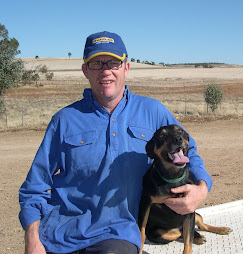
Ray Ward – Ward Laboratories. Kearney Nebraska

Ray has been testing soil for farmers since 1983 and this has expanded to include tissue testing, feed testing and manure testing. He now does over 215,000 soil tests each year. His soil test prices were at least half the price of Australian tests. A lot of the No Till on the Plains farmers utilise his testing service. They are working on soil biological activity testing but thinks this is a while away.


It was interesting that Ray commented on the recent issues arising from the use of Roundup over a period of time and the build up in soil and the affects that this will have now and in the near future on soil health.

Ray likes to talk about soil on its productivity basis rather than fertility as this could just be a function of artificial fertilisers. Ray used to have a turn around time of one day for soil tests but now due to the number he takes 2 days. All results are emailed out to the clients if the farmer has email!!

An interesting note is that a number of his clients and in areas across the plain have lost three feet of topsoil. He feels it will take 10 years to rebuild the soil structure using the no till system in the top 50cm and lower down it will take hundreds of years.

Big Ball Of Twine


Kansas is famous for a couple of things. The Big Ball of Twine and the Geodetic Centre of the USA